Small businesses today operate in a marketplace that never sleeps. Customers search for products at midnight, compare services on their lunch break, and make purchasing decisions before ever picking up a phone. If your website is slow, confusing, or outdated, those customers are not waiting around. They simply leave, which is why investing in the best web design and development services has become essential for businesses that want to stay competitive online.
The good news? Investing in the right web design and development services can completely change that story. This guide walks you through what actually matters, what to look for, and how small businesses are using smart web strategies to compete with brands that have far bigger budgets.
Why Does Your Website Matter More Than Ever for Small Businesses?
The numbers speak clearly here. According to a Stanford study, 75% of people judge a company’s credibility based on website design alone. Not the product. Not the reviews. The design. That is a significant weight for something many small business owners treat as an afterthought, which is why investing in best web design and development services has become essential for building trust and staying competitive in today’s digital landscape.
Beyond aesthetics, a well-built website works like a 24/7 salesperson. It captures leads, answers questions, builds trust, and converts visitors into paying customers, even while you sleep.
What Services Should a Small Business Actually Invest In?
Not every business needs the same thing. A local bakery has different goals than a B2B consultant. But there is a core set of services that deliver real results for small businesses regardless of industry.
Custom Website Design
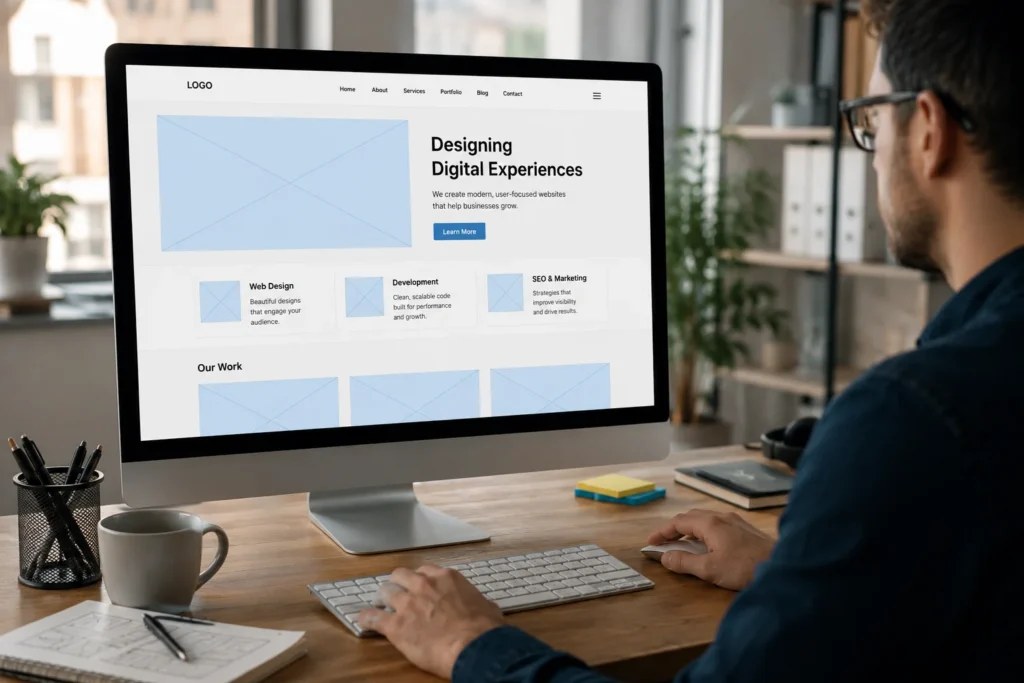
Template websites have their place, but they come with serious limitations. A custom-designed site is built around your brand identity, your audience, and your specific goals. It does not look like a thousand other businesses using the same theme. Working with a professional ui ux design services company ensures that every page, every button, and every interaction is crafted to guide visitors toward a decision rather than leaving them confused.
Mobile-First Development
As of 2024, over 60% of global web traffic comes from mobile devices. If your website is not optimized for smaller screens, you are already losing more than half your potential audience before they even read a single word. Mobile-first development means designing for phones first and scaling up, not cramming a desktop site into a small screen.
Search Engine Optimization (SEO)
A beautiful website with no visibility is like a billboard in the middle of a forest. On-page SEO, proper site structure, fast loading speeds, and relevant content are all built into a good development process. These are not optional extras. They are foundational.
E-commerce Integration
If you sell products or services online, your development team needs to build a buying experience that is smooth, secure, and simple. Cart abandonment remains a massive problem for small businesses, with rates averaging around 70% across industries. A well-designed checkout process directly addresses this.
App Design and Development
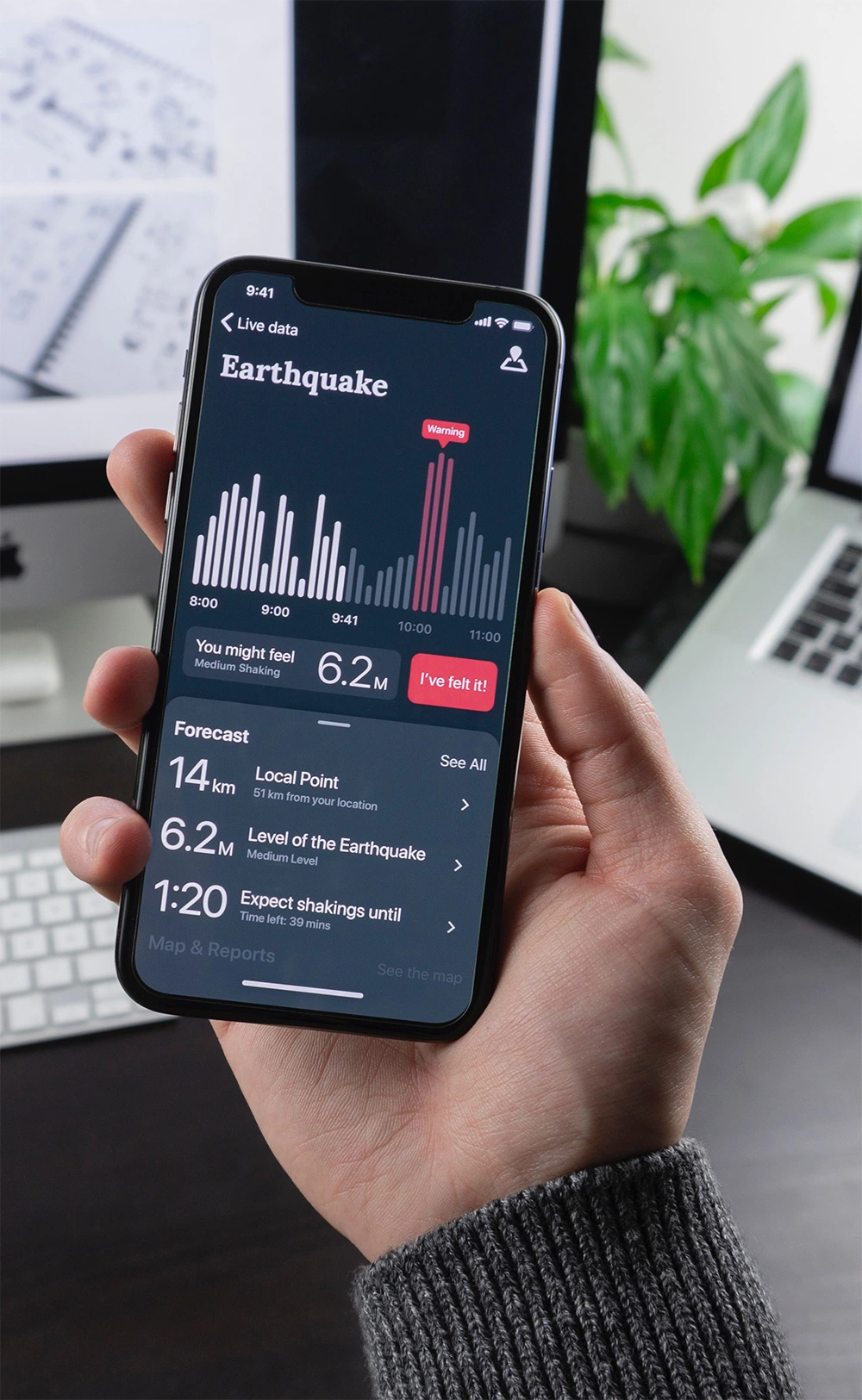
Many growing small businesses are also exploring digital products beyond just websites. If your business model calls for a booking system, loyalty program, or client portal, quality app design and development services can give you a competitive edge that larger brands often overlook at the local level.
How Do You Know If You Are Working With the Right Team?
This is where many small business owners make costly mistakes. They go with the cheapest option or someone who “does websites on the side.” Here is what to actually look for when hiring a web design and development partner.
A strong portfolio with results, not just pretty screenshots. Ask what happened after the redesign. Did traffic improve? Did leads increase? Numbers tell a better story than visuals alone.
Clear communication and a defined process. A good agency will walk you through discovery, wireframing, design, development, testing, and launch. If someone jumps straight to design without understanding your business goals, consider that a red flag.
Post-launch support. Websites need maintenance. Plugins update, security patches roll out, and content needs refreshing. A team that disappears after launch is not a long-term partner.
What Makes a Small Business Website Actually Convert Visitors?
Traffic is only half the battle. Conversion is the goal. Here are the elements that separate a website that looks good from one that actually generates business.
Clear messaging above the fold. Within three seconds, a visitor should know exactly what you do, who it is for, and what to do next. Vague taglines and generic stock photos do not achieve this.
Trust signals. Reviews, testimonials, certifications, and case studies all reduce the natural hesitation a new visitor has. Place them where the decision happens, not buried on a “reviews” page nobody visits.
Fast load times. A one-second delay in page load time can reduce conversions by 7%, according to Akamai research. Speed is not a technical detail. It is a business metric.
Strategic calls to action. Every page should guide the visitor toward one primary action. Whether that is booking a call, requesting a quote, or signing up for an offer, clarity beats cleverness every time.
Is Investing in Web Design Really Worth It for a Small Budget?
This question comes up often and it is a fair one. The honest answer is that poor web design costs far more than good web design over time. Lost credibility, missed leads, high bounce rates, and poor search rankings all quietly drain revenue that never shows up on any single invoice.
Businesses that invest in professional web design report measurable improvements. A study by Forrester Research found that a well-designed user experience can increase conversion rates by up to 200% to 400%. For a small business, even a modest improvement in conversions can be the difference between a slow month and a record one.
Frequently Asked Questions
Q1: How much does a professional website cost for a small business?
Costs vary widely depending on complexity. A basic professional website typically ranges from $1,500 to $5,000, while custom-built sites with advanced features can run higher. The better question is what a poor website is costing you in lost business.
Q2: How long does it take to build a small business website?
A standard website usually takes 4 to 8 weeks from start to launch. Timelines depend on how quickly feedback is provided, the scope of the project, and how much custom functionality is involved.
Q3: Do I really need a custom website or will a template work?
Templates can work for very early-stage businesses, but they limit your brand differentiation and often come with performance and SEO drawbacks. A custom site is built around your specific audience and goals, which pays off as your business grows.
Q4: What is the difference between web design and web development?
Design focuses on how a site looks and feels, including layout, colors, and user flow. Development is the technical side, building and coding the site so it actually functions. Great results require both disciplines working together.
Q5: Will my website rank on Google after it is built?
A well-built site creates the right foundation for SEO, but ranking takes ongoing content and optimization work. Good developers bake SEO best practices into the build. Sustained rankings typically come from a consistent content and link strategy over time.
Q6: How often should a small business update or redesign its website?
Minor updates like content refreshes and security patches should happen regularly. A full redesign is worth considering every 3 to 4 years, or sooner if your bounce rate is high, your branding has changed, or your site feels noticeably dated compared to competitors.