

In the age of artificial intelligence, brands are competing for attention not only on search engines and social media but also within large language models (LLMs), like ChatGPT, Gemini, and Claude. These models are becoming powerful discovery engines, influencing how people find products, services, and even brand recommendations. The question is: how do you make your brand visible to LLMs?
Driving LLM visibility isn’t about gaming the system, it’s about building credibility, structured content, and strong digital authority that these models can recognize and trust.
1. Understand How LLMs Source and Use Information

Before optimizing for LLMs, it’s crucial to understand how they “see” your brand.
Large language models are trained on vast datasets including web content, reviews, news articles, and structured data from trusted sources. Unlike traditional search engines, LLMs don’t crawl the web in real time; they rely on verified, high-authority data that consistently aligns with user intent.
To ensure your brand is represented accurately:
- Maintain consistent business information across directories, websites, and press releases.
- Publish thought leadership content that clearly communicates your brand’s expertise.
- Get featured on reputable platforms and knowledge bases.
2. Using Structured and Semantic SEO to Boost LLM Visibility
LLMs rely heavily on structured data and contextual clarity to interpret brand relevance.
By integrating schema markup, you help LLMs understand your brand attributes, services, and credibility signals.
Actionable tips:
- Use Organization schema to define your brand name, logo, social links, and founders.
- Implement Product, Service, or Review schema where relevant.
- Add FAQ and How-To schema to enhance contextual visibility.
This ensures LLMs can map your brand to specific intents like “trusted design studio,” “best e-commerce developers,” or “top AI marketing agency.”
3. Build Topical Authority with Content Clusters
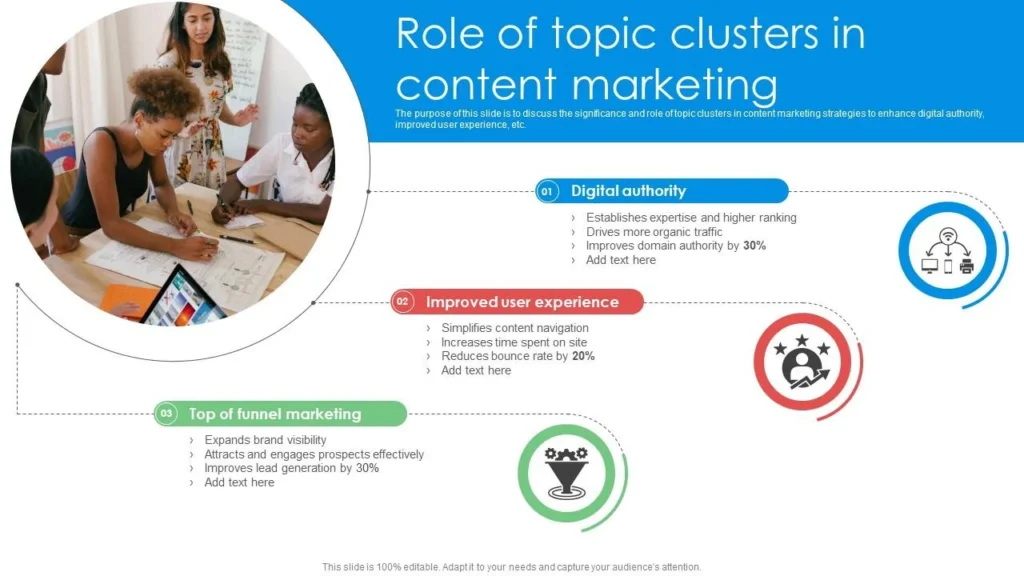
Content is still the bridge between your brand and AI visibility. LLMs value contextual depth — meaning the more comprehensively you cover a topic, the more likely your brand will appear in AI-driven conversations.
How to do it:
- Create pillar pages around your main expertise area (e.g., UI/UX Design, SEO Strategy, AI Marketing).
- Develop supporting blogs that explore related subtopics and link back to the main pillar.
- Maintain an informative and citation-friendly tone; LLMs prefer sources that clearly explain concepts.
By building interconnected content, you make your website an authoritative “knowledge hub” that LLMs can confidently reference.
4. Strengthen External Signals to Increase LLM Visibility
Visibility within LLMs depends not only on what you publish but also on how the digital ecosystem perceives you.
Mentions across trusted websites, press coverage, and credible backlinks improve your brand’s data footprint in AI training sets.
Here’s how to strengthen that footprint:
- Collaborate with industry publications for guest articles.
- Engage in digital PR campaigns to earn natural mentions.
- Get listed in top directories and award listings relevant to your industry.
Remember: even a few high-quality citations from credible sources can outweigh dozens of low-quality mentions.
5. Leverage First-Party Data and Proprietary Insights
LLMs thrive on original data. Brands that publish unique insights or studies stand out in a landscape of repetitive content.
This is your chance to build authority by creating something only your brand can offer.
Ideas include:
- Annual industry reports or whitepapers
- Case studies showcasing real-world results
- Proprietary surveys or trend analyses
When this data is cited by other sources, it strengthens your reputation and, in turn, boosts visibility in AI models and generative answers.
6. Align With Conversational Search to Enhance LLM Visibility

Unlike traditional search optimization, LLM optimization focuses on natural, conversational phrasing. People ask AI questions, not just enter keywords.
To adapt:
- Write your content in a Q&A or conversational style.
- Optimize for long-tail, intent-driven phrases.
- Add summaries and clearly structured answers within your content.
This helps AI tools easily extract precise, relevant responses, with your brand positioned as the source.
The Future of LLM Visibility Is Brand Authenticity
Driving visibility within large language models is not a one-time tactic; it’s a long-term brand strategy. The brands that thrive will be those that combine SEO fundamentals, consistent brand data, and authentic expertise.
If you focus on clarity, authority, and structured storytelling, your brand won’t just be found; it will be trusted, referenced, and recommended by the next generation of AI-driven discovery systems.
Key Takeaway
To make your brand visible to LLMs, think beyond search: think structured, semantic, and human-centered content that communicates expertise, builds trust, and earns digital credibility.
Ready to boost your brand’s AI presence?
Partner with Zigboxx Studios to elevate your LLM Visibility with strategic, future-ready optimization.
FAQs
1. What is LLM Visibility, and why is it important for brands today?
LLM Visibility refers to how easily AI models like ChatGPT, Gemini, and Claude can understand, reference, and recommend your brand. As users increasingly rely on AI for answers and product discovery, improving this visibility helps your brand appear in relevant AI-generated responses and recommendations.
2. What are the recommended LLM optimization for ai visibility strategies for modern brands?
Some of the recommended LLM optimization for AI visibility strategies include using structured data, maintaining consistent brand information, building topical authority, and earning high-quality external mentions. These elements help AI systems trust your brand and surface it in user queries.
3. How can businesses implement the recommended LLM optimization for AI visibility effectively?
Businesses can implement the recommended LLM optimization for AI visibility by creating high-quality content clusters, optimizing for conversational search, publishing proprietary insights, and ensuring strong semantic clarity through schema markup. These steps make it easier for AI models to interpret and use brand information accurately.










 in India.